The Legacy and Versatility of
Tulipwood Poplar

As the proudest member of the Magnolia family, Poplar is the tallest hardwood species in North America. Reaching heights of up to 200 feet, this "pioneer species" has a legacy stretching from indigenous canoes to pioneer paneling. While traditionally a utility wood, our thermal modification process unlocks its full potential for the modern building envelope.

The Thermal Evolution

While too soft for flooring, Poplar excels in siding, soffit, and ceiling applications. Its smooth grain is particularly receptive to the thermal modification process, producing a rich, uniform dark brown that minimizes natural color variations. It is a high-performance, lightweight, and carbon-sequestering solution.
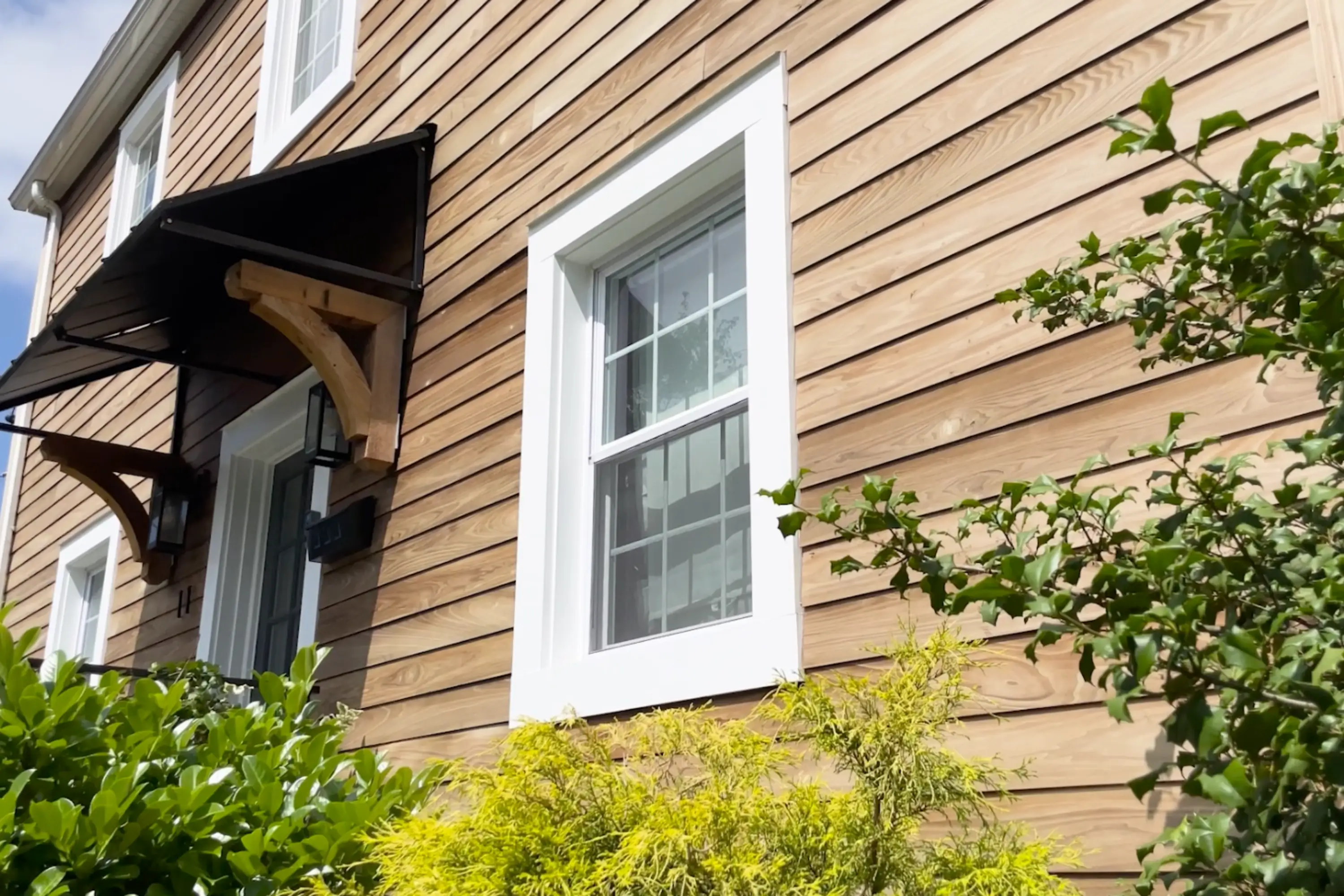
Thermally Modified Pennsylvania Poplar siding detail demonstrating color uniformity
  • Origin: Pennsylvania, USA
  • Latin Name: Liriodendron tulipifera
  • Durability: Class 1 (25+ Year Service Life)
  • Weight: One of the forest's lightest varieties (Ideal for soffits)

Interactive Species Comparison

SUse the slider to see how it transitions from a UV-protected finish to a natural silver patina.

Oak: Protected
Oak: Silver Patina
New: Day 1
Aging: 3-6 Months
Patina: 1 Year+

The Finishing Path

To maintain the deep, chocolate tones seen in our fresh-milled hardwoods, we recommend applying a UV-protecting oil like Cutek Extreme. For optimal performance, a maintenance coat is typically applied roughly one year after initial installation, allowing the wood to retain its vibrant natural color.

The Natural Path

If left unfinished, Americana™ will naturally "season" into a uniform silver patina. Because the wood is thermally modified to a Class 1 durability, this color shift is purely aesthetic and does not affect the board's structural integrity, moisture resistance, or resistance to rot.

Why Architects Specify Americana™ Poplar

  • 1. Exceptional Color Uniformity

    While raw Poplar features contrasting white sapwood and green/brown heartwood, thermal modification mellows these differences into a rich, uniform dark chocolate tone. This provides a high-end, exotic aesthetic using a domestic species.

  • 2. The Premier Lightweight Choice

    As one of the forest’s lightest varieties, Poplar is the ideal specification for overhead applications like soffits and ceilings. Its low density reduces structural load while maintaining the Class 1 durability required for exterior exposure.

  • 3. Superior Surface Smoothness

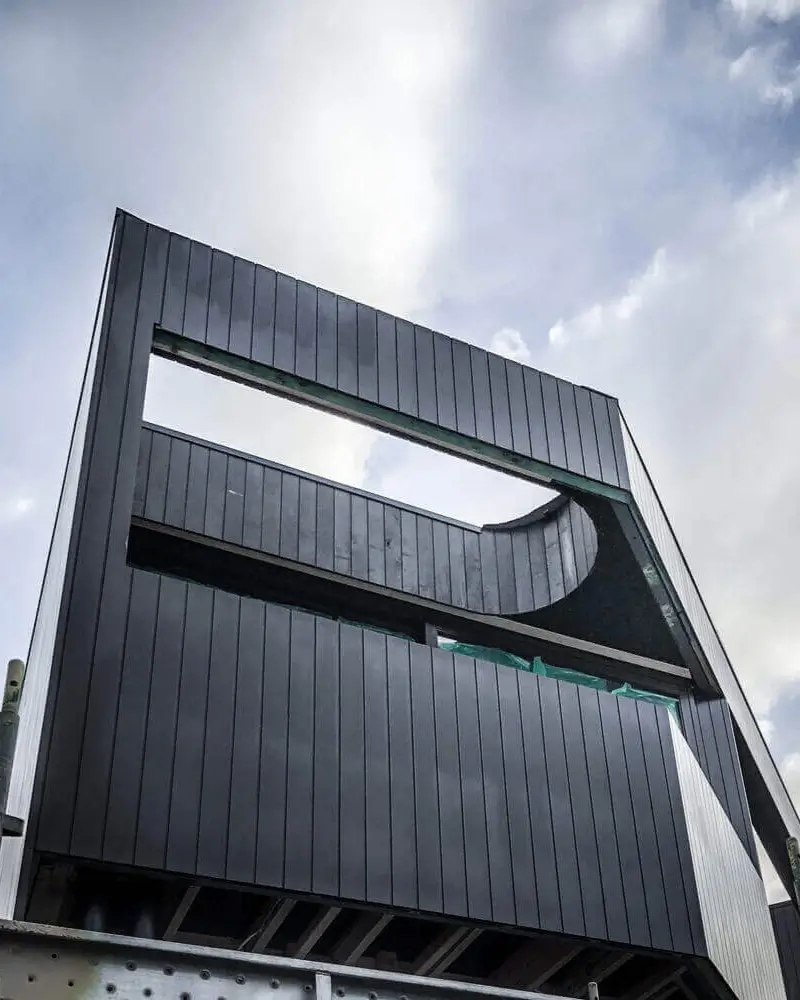
    Poplar’s smooth grain structure is particularly receptive to modification, resulting in a sleek surface that stays dimensionally stable. This stability ensures that tight-tolerance architectural profiles remain crisp and true over time.

Botanical Source: Credits to "A Natural History of Trees of Eastern and Central North America."

Sleek surface of thermally modified Pennsylvania Poplar soffit board

Feel the Finish of Pennsylvania Poplar

Technical data is only half the story. Request a sample kit to see how our thermally modified Poplar fits your next project.